
Each-Way Betting on the Grand National Explained
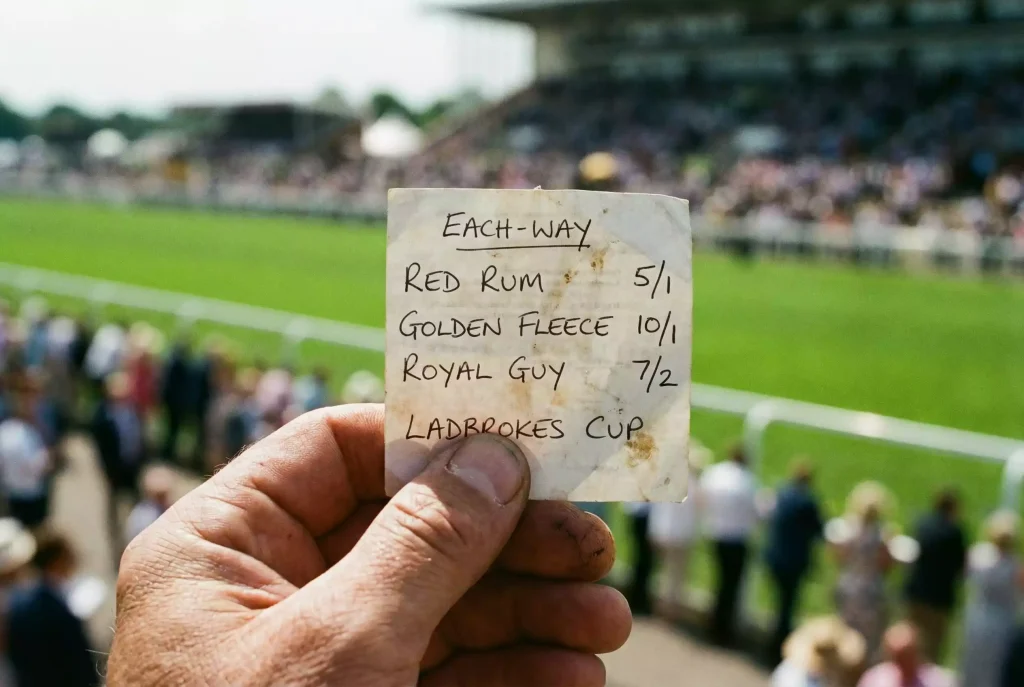
Each-way betting on the Grand National is not just popular—it is the dominant way Britain bets on the race. According to grandnational.org, between 74 and 75 per cent of all wagers placed on the Grand National are each-way bets. That figure alone tells you something important: in a chaotic 34-runner handicap steeplechase over four miles and two furlongs, punters instinctively hedge their risk.
The logic is sound. The Grand National is the most unpredictable race on the calendar. Horses fall, get brought down, refuse at fences, or simply run out of stamina. Backing a single horse to win outright feels like threading a needle in a hurricane. Each-way betting provides a safety net. Your horse does not have to cross the line first—it just needs to finish in the places, and you still collect a return.
But here is where most casual punters go wrong: they assume each-way terms are standardised. They are not. One bookmaker might pay out on the first four finishers. Another pays on seven. The fraction of the odds you receive for the place portion varies too—typically one-quarter or one-fifth of the win odds. These differences compound. On a 20/1 shot that finishes third, the gap between a four-place payout at 1/5 odds and a seven-place payout at 1/4 odds can be significant.
This article breaks down the mechanics of each-way betting in plain terms. You will learn exactly how an each-way bet splits into its win and place components, how to calculate your potential returns, and why place terms matter so much in a race with this many runners. We will compare what the major bookmakers offer for the Grand National specifically—because standard each-way terms often improve for the big race—and show you worked examples at different price points.
Whether you are placing your annual flutter or building a more strategic approach, understanding each-way betting properly is the single most valuable skill for the Grand National. The average stake on the race is just £5.42 according to OpenBet data. You do not need deep pockets to bet intelligently. You just need to know where your money goes.
How Each-Way Betting Works
An each-way bet is two bets in one. When you place a £10 each-way wager, you are actually staking £20—£10 on your horse to win, and £10 on your horse to place. The win portion pays out only if your selection finishes first. The place portion pays out if your selection finishes anywhere within the specified place terms, which for the Grand National typically means the first four, five, six, or seven positions depending on your bookmaker.
The place portion does not pay the full odds. Instead, you receive a fraction of the win odds. This fraction is usually either 1/4 or 1/5. If you back a horse at 20/1 each-way with 1/5 odds on the place portion, and your horse finishes in the places but does not win, you collect 4/1 on your place stake. On a £10 place stake, that returns £50 (£40 profit plus your £10 stake back). You lose the £10 win stake, so your net position is +£30.
If your horse wins, you collect both portions. The win stake pays at full odds, and the place stake pays at the fractional odds. Using the same example—£10 each-way at 20/1 with 1/5 place odds—a winning selection returns £210 from the win portion (£200 profit plus £10 stake) and £50 from the place portion, for a total return of £260 and a profit of £240.
Why the Fraction Matters
The difference between 1/4 and 1/5 odds might seem marginal, but it compounds quickly at longer prices. On a 20/1 shot, 1/4 place odds give you 5/1 on the place portion, while 1/5 gives you 4/1. On a £10 place stake, that is the difference between £60 returned and £50 returned—a £10 swing that represents 50 per cent of your original place stake.
At higher odds, the gap widens further. A 40/1 outsider with 1/4 place odds returns 10/1 on the place portion. With 1/5 odds, it returns 8/1. On a £10 stake, that is £110 versus £90—a £20 difference. Across several bets over the course of the Grand National Festival, choosing the right bookmaker for place fractions can materially affect your bottom line.
The Grand National Context
Standard each-way terms in British horse racing depend on field size. Races with 5-7 runners typically pay two places at 1/4 odds. Races with 8-15 runners pay three places at 1/5 odds. Races with 16 or more runners—handicaps included—pay four places at 1/4 odds.
The Grand National qualifies for the 16+ runner category, but bookmakers frequently enhance their terms for the race. The standard four places becomes five, six, or even seven. These enhanced terms are promotional tools to attract Grand National punters, but they represent genuine value if you understand how to exploit them. A horse finishing fifth in the National would be a losing bet under standard terms. With enhanced five-place terms, it becomes a winner.
“This year, the Grand National continued to attract extraordinary levels of bettors. With an average win and each way stake being £5.42, any downtime would have risked hundreds of thousands of pounds of lost turnover,” noted Florian Diederichsen, CTO at OpenBet, underlining just how central each-way betting is to the Grand National’s commercial footprint. That volume flows through dozens of bookmakers—and the terms they offer vary considerably.
Grand National Place Terms by Bookmaker
The variation in place terms across the market is substantial. Choosing the right operator can mean the difference between a payout and a near-miss.
For the 2026 Grand National, the industry standard sits at four places paid at 1/4 odds. This is what you will find at most high street bookmakers and many online operators if you do not check the fine print. Four places in a 34-runner field means roughly an 11.8 per cent chance that any randomly selected finisher lands in the places—better than win-only, but not by as much as you might think.
Several bookmakers improve on this baseline. Five-place terms at 1/4 odds extend your coverage to approximately 14.7 per cent of the field. Six places takes it to 17.6 per cent. The numbers shift the maths meaningfully.
Betfred stands alone in offering seven places on the Grand National—the most generous place terms in the market. According to Racing Post, no other major UK bookmaker matches this. Seven places at 1/4 odds means a finisher anywhere in the top 20.6 per cent of the field returns money on your place stake. In practical terms, if your horse completes the course and finishes with the main pack rather than trailing in last, you have a real chance of collecting.
Comparing the Market
Here is how the major bookmakers typically stack up for Grand National each-way terms. Note that these are illustrative of recent years and operators may adjust their offers closer to race day:
| Bookmaker | Places Paid | Place Fraction |
|---|---|---|
| Betfred | 7 | 1/4 |
| Paddy Power | 5-6 | 1/4 |
| Betfair Sportsbook | 5-6 | 1/4 |
| William Hill | 5 | 1/4 |
| bet365 | 4-5 | 1/4 or 1/5 |
| Ladbrokes | 4-5 | 1/4 |
| Coral | 4-5 | 1/4 |
The ranges reflect that bookmakers often enhance terms as the race approaches. Ante-post each-way bets placed months in advance may receive standard four-place terms, while bets placed in Grand National week might benefit from promotional five or six-place offers. Always check the specific terms at the time of your bet, not what you remember from last year.
Why Seven Places Changes the Game
Consider a scenario where you back an 16/1 shot each-way. Under standard four-place terms, your horse finishing fifth means you lose both stakes. Under Betfred’s seven-place terms, that same fifth-place finish returns 4/1 on your place stake—£50 back on a £10 stake, meaning you only lose £10 overall rather than £20.
The gap is even more pronounced with multiple selections. If you back three horses each-way and two finish in positions five through seven, those two place payouts could more than cover the losses on the other bets. Four-place terms would give you nothing from those finishes.
When Each-Way Beats a Win-Only Bet
Each-way betting is not universally superior to win-only betting. The value proposition depends on the odds, the field size, and the specific place terms on offer. Understanding when to use each approach separates thoughtful punters from those who bet on autopilot.
The general rule is that each-way betting becomes more attractive as odds lengthen. On short-priced horses—say, anything under 6/1—each-way bets often represent poor value. The place portion pays out at such compressed odds that you are essentially paying double the stake for a modest insurance policy. If you are confident enough to back a 4/1 shot, you should probably back it to win.
The crossover point sits somewhere around 8/1 to 10/1 for most handicaps. At these odds, the place portion starts returning meaningful amounts—enough that a place finish significantly softens the blow of missing the win. In the Grand National specifically, with its enhanced place terms, the crossover point arguably shifts lower. Seven-place terms at 1/4 odds make each-way betting viable even on horses as short as 6/1, because your place coverage extends so much further than standard.
The Field Size Factor
The Grand National’s 34-runner field is its defining characteristic from a betting perspective. Large fields suppress the probability of any single horse winning, which in turn lengthens the odds across the board. Even well-fancied horses often trade at double-digit prices because the market has to accommodate so many potential winners.
This field size directly benefits each-way bettors. The mathematical probability of placing—finishing in the top four, five, six, or seven—increases proportionally with the number of places paid. In a 34-runner race with four-place terms, roughly 12 per cent of runners will place. With seven-place terms, over 20 per cent will place. The underlying probability of a place finish becomes high enough that the insurance value of each-way genuinely pays its way.
Contrast this with a six-runner race where two places are paid. There, 33 per cent of the field places anyway, and the place odds compress to reflect it. Each-way betting in small fields often destroys value rather than creating it.
Statistical Reality
According to Entain data, 82 per cent of cash bets placed on the Grand National are staked at £5 or less. These modest stakes suggest a punter base that is risk-conscious, treating the race as entertainment rather than serious investment. Each-way betting fits this profile perfectly—it extends the enjoyment of a near-miss, turning fifth place into a partial refund rather than total loss.
For this recreational majority, each-way is almost always the correct play. The mathematics favour it, the psychology supports it, and the bookmaker promotions enhance it. Win-only betting on the Grand National makes sense only when you have strong conviction in a specific selection and prefer a binary outcome.
Each-Way Calculation Examples
Theory is one thing. Seeing actual numbers clarifies how each-way returns work in practice. Below are three worked examples covering different price ranges, using standard Grand National enhanced terms of four places at 1/4 odds for the first two, and Betfred’s seven places at 1/4 odds for the third.
Example One: The Favourite at 4/1
You back the market leader at 4/1 each-way for £10—total stake £20. Four places at 1/4 odds means the place portion pays at 1/1 (evens).
If the horse wins: Win portion returns £50 (£40 profit + £10 stake). Place portion returns £20 (£10 profit + £10 stake). Total return: £70. Profit: £50.
If the horse places (2nd-4th): Win portion loses (£10 lost). Place portion returns £20 (£10 profit + £10 stake). Total return: £20. Net position: break even.
If the horse finishes 5th or worse: Both portions lose. Total return: £0. Loss: £20.
At this price, each-way provides only break-even protection on a place finish. The insurance barely covers the extra stake. This illustrates why short-priced each-way bets offer limited value.
Example Two: The Mid-Range Selection at 12/1
You back a progressive second-season chaser at 12/1 each-way for £10—total stake £20. Four places at 1/4 odds means the place portion pays at 3/1.
If the horse wins: Win portion returns £130 (£120 profit + £10 stake). Place portion returns £40 (£30 profit + £10 stake). Total return: £170. Profit: £150.
If the horse places (2nd-4th): Win portion loses (£10 lost). Place portion returns £40 (£30 profit + £10 stake). Total return: £40. Profit: £20.
If the horse finishes 5th or worse: Both portions lose. Total return: £0. Loss: £20.
Now the place portion generates genuine profit even without the win. A placed finish returns your stake plus 100 per cent. This is the price range where each-way betting starts making clear sense.
Example Three: The Outsider at 33/1 with Seven Places
You back a well-handicapped outsider at 33/1 each-way for £10 with Betfred—total stake £20. Seven places at 1/4 odds means the place portion pays at 33/4 (8.25/1).
If the horse wins: Win portion returns £340 (£330 profit + £10 stake). Place portion returns £92.50 (£82.50 profit + £10 stake). Total return: £432.50. Profit: £412.50.
If the horse places (2nd-7th): Win portion loses (£10 lost). Place portion returns £92.50 (£82.50 profit + £10 stake). Total return: £92.50. Profit: £72.50.
If the horse finishes 8th or worse: Both portions lose. Total return: £0. Loss: £20.
At outsider prices with enhanced place terms, a place finish returns over four times your total stake. Even finishing seventh—a position that would mean nothing under standard terms—generates a significant profit. This is where each-way betting truly shines.
Common Each-Way Mistakes to Avoid
Each-way betting is straightforward in concept but easy to misapply. A few recurring errors cost punters money every Grand National.
Backing Short-Priced Horses Each-Way
The most common mistake is applying each-way logic to market leaders. When you back a 3/1 shot each-way, the place portion pays at 3/4 (three-quarters of a point). A place finish returns just £17.50 on a £10 stake, failing to cover the £10 win stake you lost. You end up £2.50 down despite your horse finishing in the places.
The break-even point under standard 1/4 place odds is 4/1. At that price, a place finish exactly covers your total stake. Below 4/1, place finishes lose you money. Above 4/1, they generate profit. Unless you genuinely expect a short-priced favourite to win, backing it each-way is burning money on false insurance.
Ignoring Place Fraction Differences
Some bookmakers offer 1/5 place odds instead of 1/4. This might seem like minor detail, but it materially changes returns. A 20/1 horse placing with 1/4 odds returns 5/1 on the place stake. With 1/5 odds, it returns 4/1. On a £10 place stake, that is £60 versus £50—a 20 per cent reduction in place returns.
Always check whether your bookmaker pays 1/4 or 1/5 on the Grand National. If they are offering 1/5, consider whether the extra places on offer compensate for the lower fraction. Sometimes they do. Sometimes you are better off elsewhere.
Assuming All Bookmakers Offer the Same Terms
Grand National place terms are not standardised. One bookmaker might offer four places at 1/4 odds, another five places at 1/4 odds, another seven places at 1/4 odds. These differences are not cosmetic. They change which outcomes make you money and which do not.
A horse finishing sixth pays out at Betfred’s seven places. It pays nothing at a four-place bookmaker. If you placed your bet without checking, you could miss out on a payout entirely—not because your analysis was wrong, but because you did not shop around.
Forgetting Your Bet is Two Bets
New punters sometimes misunderstand that a £10 each-way bet costs £20. They see “£10 each-way” and expect a £10 total outlay. When their account debits £20, they think there has been an error. There has not. Each-way is two bets. Budget accordingly.
Which Bookmaker for Each-Way Grand National Bets
Choosing the right bookmaker for your Grand National each-way bet depends on what you prioritise. Place terms matter most, but other factors—odds quality, Best Odds Guaranteed policies, and ease of use—play supporting roles.
For Maximum Place Coverage
Betfred is the clear leader. Seven places on the Grand National, paid at 1/4 odds, gives you the widest safety net in the market. No other major UK bookmaker consistently matches this. If your primary concern is maximising the probability of a return—getting something back from your outlay—Betfred should be your first call.
The trade-off is that Betfred’s odds on individual horses are not always market-leading. You might find an extra point or two of value elsewhere. But for each-way bettors, the enhanced place terms typically outweigh marginal odds differences. A horse at 18/1 with seven places beats a horse at 20/1 with four places, because your probability of collecting on the place portion roughly doubles.
For Odds Quality with Good Terms
Paddy Power and Betfair Sportsbook typically offer five or six places while maintaining competitive odds across the board. If you want strong place coverage without sacrificing top-of-market prices, these operators represent a sensible middle ground. Both regularly feature in best odds comparisons for major races.
William Hill and Ladbrokes sit slightly below in terms of place generosity but remain solid all-round options. Their pricing is consistent, and their platforms are among the most familiar to British punters.
For Odds Hunters
If you believe you have identified a genuine value selection—a horse whose true chance exceeds what the market implies—then each-way considerations become secondary. In that scenario, you want the best available odds, full stop. Use odds comparison tools to identify the market leader on your selection, and take the price regardless of place terms.
This approach suits confident, experienced punters rather than recreational bettors. Most Grand National punters are not odds hunting; they are looking for an enjoyable flutter with a reasonable chance of getting something back. For that majority, place terms take priority.
A Note on Betting Accounts
There is nothing stopping you from holding accounts at multiple bookmakers and using the best option for each bet. Betfred for each-way Grand National wagers, another operator for win-only bets elsewhere. The UK market is competitive precisely because punters can shop around. Take advantage of it.