
Melling Chase Betting: Aintree’s Top Two-Mile Contest
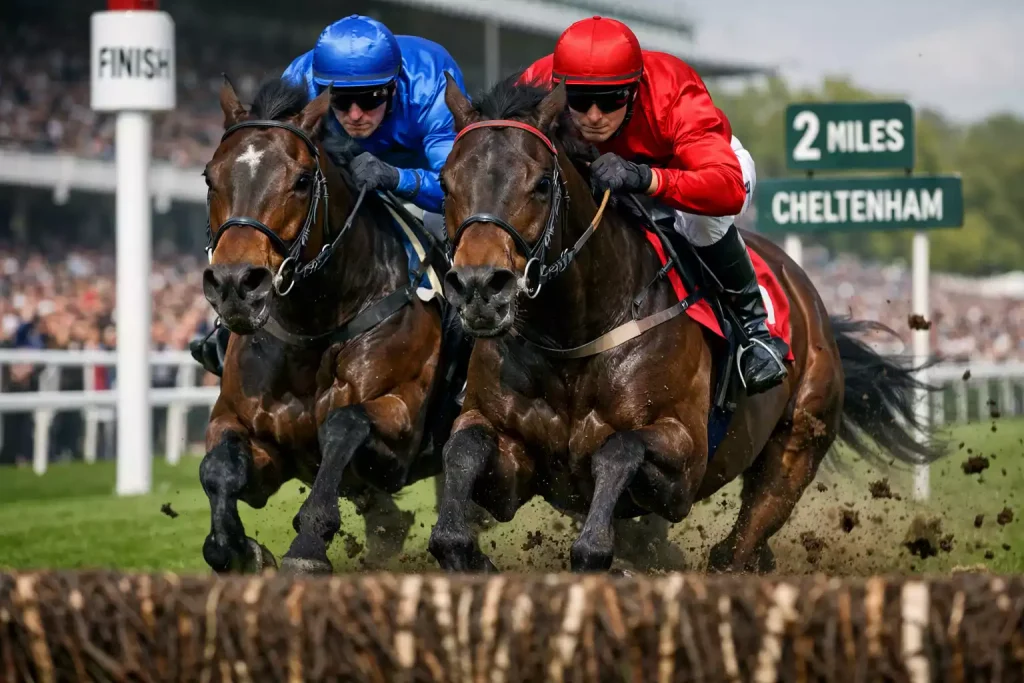
The Melling Chase brings speed thrills to Ladies Day. This Grade 1 contest over two miles and four furlongs on the Mildmay Course attracts the fastest chasers in training, providing a spectacle of raw pace that contrasts with the stamina test that follows on Grand National Saturday. Speed thrills, and the Melling Chase delivers them in abundance.
Friday’s feature race often produces exceptional times as quality horses race at near-maximum pace throughout. The two-mile-four trip sits at the shorter end of chase distances, favouring speed over stamina without entirely eliminating the need to stay the trip. Horses that can maintain championship velocity over regulation fences dominate this race year after year.
Understanding the Melling Chase’s demands helps identify contenders whose form translates to Aintree’s Mildmay Course. Queen Mother Champion Chase form provides the primary formline, but not every Cheltenham runner reproduces that level three weeks later. Fatigue, ground differences, and the subtle variations between courses create opportunities for punters who look beyond obvious form connections.
Race Profile
The Melling Chase covers two miles and four furlongs over the Mildmay Course. The trip adds four furlongs to the Champion Chase distance, asking horses to maintain speed for slightly longer without fundamentally changing the test. Speed chasers comfortable at two miles typically handle the extra distance; true two-milers sometimes find it stretching.
Grade 1 classification ensures the best two-mile chasers compete. Field sizes typically range from six to ten runners, creating match-like conditions where the market often concentrates on two or three principals. Smaller fields reduce each-way value but increase the probability that form plays out as expected.
The Mildmay Course’s left-handed configuration and uphill finish test different qualities than Cheltenham’s New Course. Horses that quickened around Cheltenham’s downhill turns might find Aintree’s climb less suited to their running style. Conversely, horses that stayed on without winning at Cheltenham sometimes find Aintree’s finish plays to their strengths.
Ground conditions in April typically produce good to soft going at Aintree. Speed chasers bred for quick ground occasionally struggle on testing surfaces. Checking whether contenders have proved themselves when conditions ease reveals whether ground might expose weaknesses hidden on faster surfaces.
Key Contenders
Willie Mullins’ remarkable 2026 Aintree haul of eight winners and £1.5 million in prize money included the Melling Chase. Any Mullins entries command respect regardless of Champion Chase outcome. The stable’s depth means Mullins can rest his Cheltenham hero and run a fresh alternative that hasn’t faced championship pressure.
Champion Chase form provides the obvious formline but requires nuanced interpretation. The winner faces triple jeopardy: recovery from maximum effort, expectation pressure, and the shortest gap between major targets. Second-placed finishers often offer better Melling Chase value because they’ve run hard without experiencing victory’s toll.
Horses that bypassed Cheltenham entirely deserve attention. Trainers sometimes keep speed chasers fresh for Aintree rather than contesting both Festivals. A horse arriving without Cheltenham fatigue faces tired rivals, potentially offsetting class differentials that form figures suggest.
British-trained contenders from Nicky Henderson, Paul Nicholls, and Dan Skelton compete annually with varying success against Irish raiders. The Melling Chase has seen British winners despite overall Irish dominance at the Festival. Home advantage, less travel, and specific Aintree preparation can offset quality gaps that appear in bare form.
Course form matters. Horses that have won or placed at Aintree previously have proved they handle the track. First-time Aintree visitors carry uncertainty that course winners don’t. Given the small field sizes, identifying horses that have answered Aintree questions helps narrow selections effectively.
Betting Strategy
Across UK jump racing in 2026, favourites won approximately 30% of races. The Melling Chase’s small fields and Grade 1 status might improve favourite strike rates slightly, but two-thirds of races still see non-favourites prevail. Opposing short-priced favourites while including them in combination bets balances risk and reward.
Pace analysis matters in two-mile-four chases. Horses that race prominently or make their own running often dominate because there’s limited time to make up ground. Front-runners that control pace can dictate terms that suit them. Closers require pace to run at and may struggle if the race develops tactically with slow early fractions.
Each-way value diminishes with small fields paying only two places. A six-runner Melling Chase paying places on first and second reduces each-way appeal compared to larger-field handicaps. Consider win-only betting on strong fancies and saver bets on alternatives rather than conventional each-way approach.
Market confidence often concentrates heavily in Melling Chase betting. A 6/4 favourite facing a 5/1 second favourite suggests the market sees clear separation. Whether that confidence proves justified depends on factors form figures don’t capture: ground suitability on the day, how hard each horse ran at Cheltenham, and which peaks for Aintree specifically.
Watch for late market movements. Money that arrives for a horse on the morning of the race often reflects information from training grounds or stable sources. A 7/1 shot shortening to 9/2 before a Grade 1 suggests someone knows something the form book doesn’t reveal.
2026 Selections
Specific selections await confirmed entries, but principles guide provisional thinking. Target horses that fit the Melling Chase profile: proven speed chasers with Grade 1 form, ideally arriving fresh or having run without maximum effort at Cheltenham. Speed thrills, but only when the horse retains enough energy to demonstrate it.
Mullins entries warrant immediate shortlist inclusion. His Aintree record and stable depth mean any runner arrives with intent and preparation. A Mullins second-string at 8/1 might offer better value than his market leader at 2/1 if the favourite faced a hard Cheltenham campaign. Assessing which Mullins horse comes in freshest often proves more important than assessing which has the best form.
Look for British-trained contenders from major yards that specifically target the Melling Chase. A horse kept fresh for Aintree while rivals contested Cheltenham faces advantageous conditions. Quality matters, but freshness creates its own quality when competitors arrive tired. British trainers have won the Melling Chase against strong Irish opposition when preparation rather than form proved decisive.
The Melling Chase rewards pace and class in roughly equal measure. Identify horses that have demonstrated both: speed figures from previous runs that compare favourably to this year’s field, and form at the highest level that proves they belong in Grade 1 company. Where pace and class combine in a fresh horse at reasonable odds, the selection makes itself.
Course form deserves weight in analysis. Aintree’s Mildmay Course tests horses differently than Cheltenham’s New Course. The uphill finish asks questions that flat finishes don’t pose. A horse that has won or placed over course and distance at previous Aintree meetings has answered questions newcomers face for the first time. Proven Mildmay performers deserve preference over untested entrants.
Consider the market’s structure when placing bets. Small fields reduce each-way value, making win-only betting potentially more appropriate. If you fancy a horse strongly, backing to win maximises returns. If you see multiple possibilities, small win bets on two or three horses provides coverage without the diminished returns each-way offers in fields paying only two places.
The Melling Chase highlights Ladies Day racing before afternoon attention shifts to fashion and socialising. Serious punters find value here while casual attention focuses elsewhere. Use that asymmetry: study the race while others don’t, and back selections with the confidence that comes from preparation rather than impulse.