
Grand National Weights and Handicapping: How Allocations Affect Odds
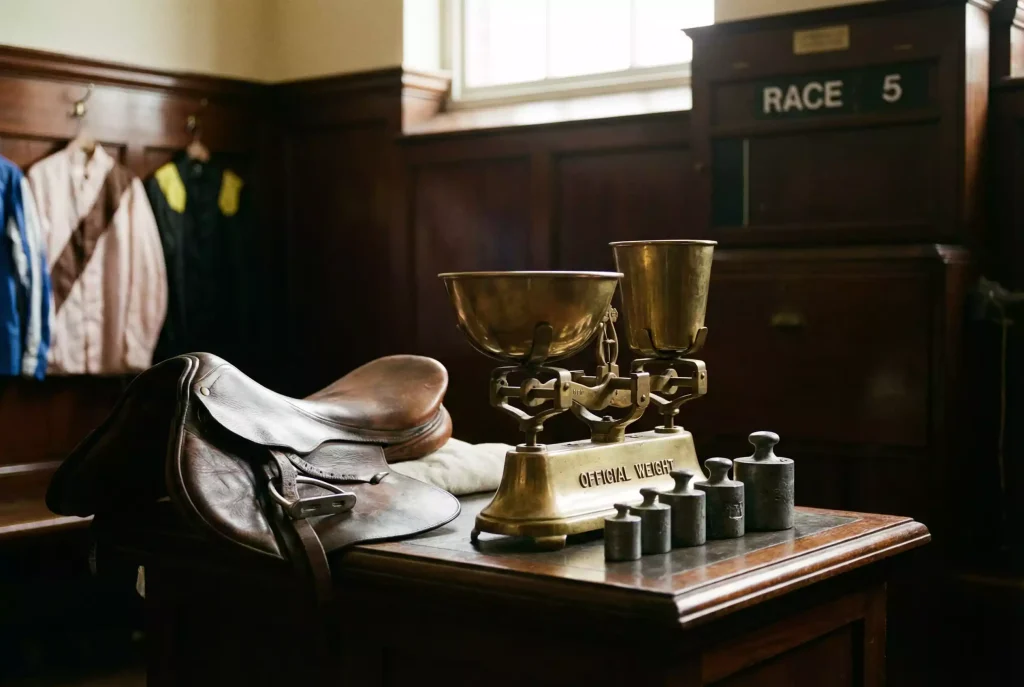
Grand National weights matter because the race is a handicap. Unlike a conditions race where every horse carries the same weight regardless of ability, the Grand National assigns weight according to official ratings. Better horses carry more weight. The handicapper’s job is to give every entrant, from the highest-rated chaser to the lowest, a theoretical chance of winning.
That theory collides with reality over four miles and thirty fences. Carrying top weight at Aintree has proved nearly impossible in the modern era. The last top weight to win was Poethlyn in 1919, over a century ago. The race demands not just class but the stamina to maintain that class under maximum burden for nearly ten minutes of racing.
Understanding how weights are allocated, where winners tend to come from in the handicap, and how to factor weight into betting decisions gives punters an edge. The BHA handicapper’s announcements in February reshape the ante-post market. Some horses become more attractive at their new marks. Others drift because connections consider the weight uncompetitive. The field from 2026 onwards reduced to a maximum of 34 runners, making each weight allocation more scrutinised than ever.
How Weights Are Set
The British Horseracing Authority handicapper assigns weights based on official ratings. Each horse carries a handicap rating reflecting its assessed ability relative to other horses. In the Grand National, these ratings translate into weights ranging from a minimum of 10st to a maximum of 11st 10lb.
The top-rated horse in the field receives top weight. Every other horse’s weight is calculated relative to that benchmark. A horse rated 10lb lower than the top-rated carries roughly 10lb less. The relationship isn’t always exact because the weights must fit within the race’s parameters, but the principle holds.
Weights are announced in February, giving trainers and owners several weeks to assess their horse’s burden. A horse assigned 11st 6lb might be deemed competitive by one stable and unworkable by another. These judgements are subjective but informed by experience. Trainers know what weight their horse has won under previously and can extrapolate whether Aintree’s distance and fences add difficulty beyond the figures.
After the weights are published, horses can move up or down the handicap based on intervening runs. A horse that wins impressively in March might have its rating raised, increasing its weight for the Grand National. Conversely, poor runs can lead to rating drops. Trainers sometimes protect their horse’s handicap mark by running in races unlikely to result in rating increases, keeping weight manageable for April.
The handicapper also publishes long-handicap positions. These are horses who would need to carry less than the minimum weight (10st) if the weights were purely mechanical. In practice, they carry 10st regardless, meaning they compete on more favourable terms than their rating strictly allows. Long-handicap horses occasionally produce surprise results.
The Winning Weight Zone
Historical analysis reveals a clear pattern. According to data from Geegeez, 25 of the last 33 Grand National winners carried 10st 13lb or less. That’s over 75% of winners coming from horses carrying below the midpoint of the weight range. The statistics are unambiguous: lighter weights win more often.
This isn’t surprising when you consider the demands of the race. Four miles over Aintree’s fences requires sustained effort. Every additional pound matters more over this distance than over two miles. A horse carrying 11st 10lb expends more energy per fence than a horse carrying 10st 7lb. By the second circuit, when stamina becomes critical, that accumulated effort compounds.
The sweet spot appears to be between 10st 7lb and 10st 13lb. Horses in this range possess enough quality to compete but don’t carry the burden that saps stamina in the closing stages. Many winners also fall into the 10st to 10st 6lb bracket, particularly those coming from the long-handicap who benefit from carrying the minimum.
This doesn’t mean top weights can’t win. It means the historical probability favours lighter-weighted horses. When constructing shortlists, punters should note where each contender sits in the weight structure. A brilliant horse at 11st 8lb faces a different challenge than a progressive horse at 10st 10lb. Both might win, but history says the latter does so more often.
Weight becomes most relevant when comparing horses of similar profile. If two entries look equally suited to the race based on form and jumping ability, the horse carrying less weight has a statistical advantage worth factoring into selections.
Top Weights in History
The top weight in the Grand National carries the highest burden and historically the longest odds against. Since 1919, no horse carrying top weight has won the race. That’s over a century of evidence suggesting that carrying the maximum makes the race unwinnable in practice, even if winnable in theory.
Several top weights have come close. Red Rum finished second carrying top weight after winning three times at lower marks. More recently, top weights have typically finished no better than mid-division, their quality insufficient to overcome the cumulative burden over Aintree’s distance.
The challenge isn’t simply the weight itself but what carrying top weight implies. A horse at the head of the handicap is typically rated highly because it has won good races. It has less to prove and more to carry. Other horses in the field have lower ratings because they haven’t achieved as much but may be improving. The top weight peaks; others climb.
Tiger Roll, who won consecutive Grand Nationals in 2018 and 2019 carrying 11st 5lb and then 11st 1lb, was pulled from the 2022 race partly due to weight concerns. Connections believed 11st 4lb was beyond what the horse could carry competitively over Aintree’s unique course. If a dual winner’s connections baulk at top weight, casual punters should consider whether backing the head of the handicap represents hope over evidence.
The market typically prices top weights accordingly. Short prices rarely apply to horses carrying 11st 8lb or more because bookmakers know the historical strike rate. When a top weight is sent off favourite, it usually means the market believes the horse is so superior that weight cannot stop it. That belief rarely proves correct.
Using Weights in Selections
Incorporating weight analysis into Grand National betting requires balance. Weight matters, but it isn’t the only factor. A horse carrying 10st 5lb that can’t jump or lacks stamina won’t beat a better horse at 11st simply because the numbers favour the lighter runner on paper.
Start by identifying horses within the winning weight zone: 10st to 10st 13lb. Within this group, look for those with form that suggests they handle the demands of marathon chasing. Proven stamina over three miles plus, clean jumping records over regulation fences, and ideally some experience of big-field handicaps contribute to a complete profile.
Be wary of horses dropping in the weights because of poor form. A horse that was rated 150 and is now rated 135 carries less weight because it has deteriorated, not because it has become more likely to win. Weight reductions that reflect loss of form offer false value.
Conversely, look favourably on horses rising through the ranks who enter the Grand National before the handicapper fully catches up. A horse that began the season rated 130 and has since won twice might enter Aintree rated 142. If those victories were impressive, the horse might be better than a 142 rating suggests. The weight it carries might still represent value relative to its true ability. Willie Mullins, assessing his 2026 Grand National team, noted of one lightly weighted entry: “My eye was drawn to him when I saw his weight. He has a lovely racing weight.”
After weights are announced in February, track how the market responds. Horses that shorten despite high weights suggest informed money believes class will overcome burden. Horses that drift despite low weights signal concerns beyond the numbers. The market’s reaction to weight announcements provides information as valuable as the weights themselves.
Combine weight analysis with form study, trainer record, and course aptitude. Weight is one lens among several. Used properly, it filters out horses statistically unlikely to win while highlighting those whose lighter burden creates opportunity.