Grand National TV Ratings and Cultural Significance: Britain’s Race
 Available in US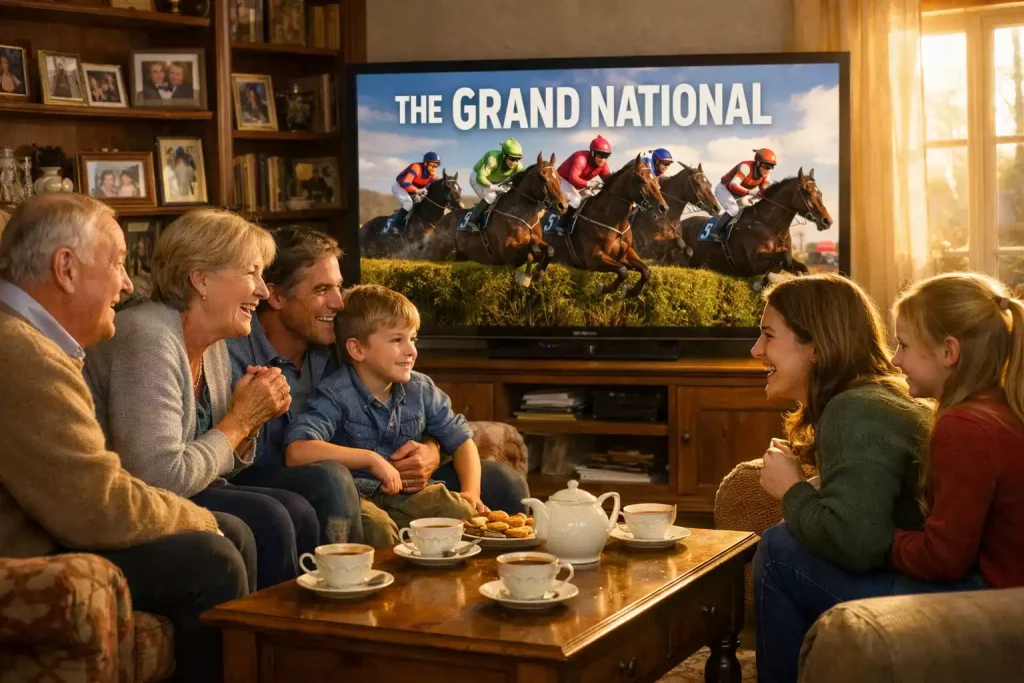
Understanding the Grand National’s cultural significance helps explain why it matters beyond betting and racing. The event connects generations, creates workplace conversations, and provides common ground for people who share little else. That cultural position sustains interest regardless of whether individual viewers have horses to cheer for.
The horses behind the legend are in Red Rum to Tiger Roll.
Viewership Numbers
The 2026 Grand National attracted 5.2 million television viewers on ITV. This figure positions the race among the most-watched sporting broadcasts of the year in the United Kingdom. While below the 2021 peak, the audience demonstrates sustained mass appeal despite competition from streaming platforms and changing viewing habits.
The 2026 Grand National saw 6.1 million viewers, reflecting the earlier start time’s impact on audience patterns. The move from late afternoon to 4pm affected who could watch live, though overall interest remained strong. These viewing figures compare favourably to other live sports broadcasts outside major football tournaments and international cricket.
Rachael Blackmore’s historic 2021 victory drew 8.8 million viewers, the highest Grand National audience in recent years. Her achievement as the first woman to ride a Grand National winner created interest beyond regular racing audiences. The storyline brought new viewers who might not otherwise have watched, demonstrating how narrative drives casual viewership.
According to Nielsen Sports data, the Grand National regularly achieves over 60% share of television audience during broadcast. This share metric reveals how dominant the race becomes for those watching television at that time. Few programmes achieve such viewing concentration in the modern fragmented media landscape.
Viewing trends show gradual decline from historic peaks but stabilisation at levels that remain commercially significant. The Grand National’s audience has adapted to changing media consumption without collapsing. Unlike events that have lost audiences dramatically, the National maintains relevance across generations.
Global Reach
The Grand National reaches an estimated 500-600 million viewers across more than 140 countries. This global audience transforms a British horse race into an international sporting event. The reach extends far beyond traditional racing territories to regions where horse racing occupies minimal cultural space.
Broadcasting arrangements ensure worldwide access. Television networks in Ireland, continental Europe, North America, Australia, and Asia carry the race live or in near-live delay. The time zone challenges that affect some markets are offset by the race’s prestige and the willingness of enthusiasts to adjust schedules.
International betting on the Grand National brings global money into British racing. Bookmakers worldwide offer markets on the race, creating liquidity that domestic betting alone wouldn’t support. This international dimension adds to prize money available and sustains commercial interest in the event.
The global audience includes expatriates maintaining connection with British culture, racing enthusiasts following the sport’s premier steeplechase, and casual viewers attracted by the race’s reputation. Each segment contributes to overall reach that positions the Grand National alongside iconic global sporting events.
Digital streaming extends reach beyond traditional television. ITVX streams domestically while various platforms carry the race internationally. This accessibility ensures that geographical location doesn’t prevent viewing for those seeking access. The modern Grand National reaches more people through more channels than ever before.
The wider context is set out in our Aintree betting guide.
Cultural Status
Survey research confirms what observation suggests: the Grand National occupies special cultural space. Approximately 77% of British adults consider the Grand National part of British culture, according to YouGov polling. That recognition exceeds awareness of many events considered culturally significant.
As Grainne Hurst, CEO of the Betting and Gaming Council, observed: “The Grand National is one of the precious few sporting events in this country with the ability to unite the entire nation around a single spectacle. It is the nation’s punt.” That phrase captures something essential about the race’s position in British life.
The Grand National functions as annual ritual. Workplace sweepstakes, family viewing traditions, and social gatherings repeat each year regardless of individual interest in racing. People who couldn’t name another horse race know the Grand National exists and often participate in some form. That penetration defines cultural significance.
Generational transmission sustains cultural status. Grandparents who watched Red Rum introduced parents who watched Desert Orchid who now watch with children discovering the race for the first time. This continuity ensures that cultural significance doesn’t depend on any single generation’s interest but flows through family traditions.
Media coverage extends beyond racing press. Mainstream news programmes cover the Grand National as a national event rather than niche sporting content. Feature pieces about horses, trainers, and jockeys appear in publications that never mention racing otherwise. This mainstream attention reflects and reinforces cultural position.
The once-a-year betting phenomenon distinguishes the Grand National from other races. People who never bet otherwise place a flutter on the National. This behaviour pattern, unique to this race, demonstrates cultural reach that pure sporting quality wouldn’t create. The Grand National gives permission to participate to people who would never enter a betting shop otherwise.
The Future
ITV’s broadcasting rights extend through 2030, ensuring continued free-to-air coverage for at least the medium term. This commitment maintains accessibility that subscription-only broadcasting might compromise. The Grand National’s cultural reach depends partly on barrier-free viewing that commercial channels provide. Pay-per-view or subscription-only access would reduce casual viewership that sustains mass audience.
Viewing habits continue evolving. Linear television viewership trends downward across demographics, though live sport partially resists this decline. The Grand National benefits from being appointment viewing that encourages simultaneous watching rather than catch-up consumption. Live events survive changing habits better than scripted content because the communal experience matters.
Younger audiences engage differently than predecessors. Social media creates second-screen experiences where viewing combines with online interaction. The Grand National generates substantial social conversation, suggesting relevance extends to digital natives even if their viewing patterns differ from traditional television audiences. Twitter, Instagram, and TikTok carry race content to demographics that television alone might not reach.
Streaming options will likely expand. ITVX already provides digital access; future arrangements might include additional platforms. Making the Grand National available wherever audiences prefer to watch ensures continued reach regardless of how consumption patterns evolve. Accessibility matters more than the specific channel providing it.
The race itself continues adapting. Safety improvements, field size changes, and timing adjustments demonstrate willingness to evolve while preserving essential character. This adaptability suggests the Grand National will remain relevant through changes that might threaten less flexible events. Britain’s race intends to remain Britain’s race for generations to come.
Betting patterns also evolve. Mobile betting now dominates where betting shops once prevailed. The Grand National adapts to these changes, remaining the focus of betting activity regardless of how that betting occurs. The cultural phenomenon of “having a flutter” on the National transcends the mechanics of how bets are placed.
Cultural significance ultimately depends on continued participation. So long as people watch, bet, discuss, and celebrate the Grand National, its cultural position remains secure. The numbers suggest that participation continues across all dimensions. The Grand National matters because enough people believe it matters, and that belief shows no signs of weakening across any demographic or region.
