
Grand National Outsiders: Finding Value in 25/1+ Longshots
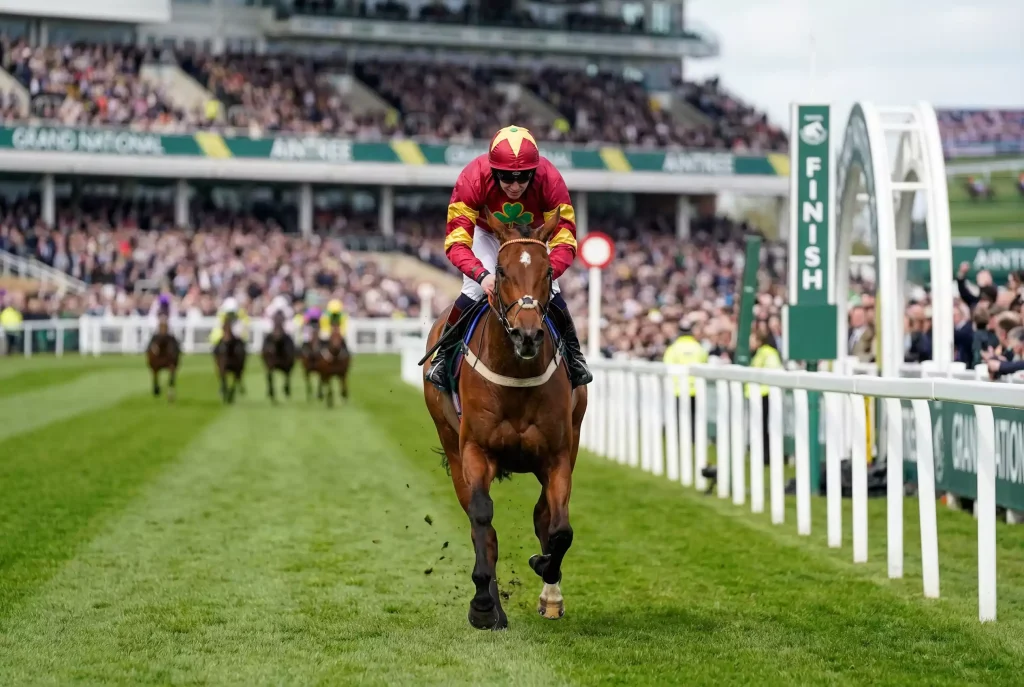
The Grand National rewards bravery, and not just from horses and jockeys. Punters who back outsiders have seen fortunes returned that make the race worth remembering. According to data from bet365, favourites have won just 10 of the last 50 Grand Nationals. That means 80% of winners came from further down the market, often at prices that would transform a modest flutter into a significant payday.
Finding value in outsiders isn’t about backing any horse at a big price and hoping for luck. The Grand National’s unique demands create opportunities for horses that the market undervalues. Some lack the profile of headline names. Others carry unfashionable form that looks better under scrutiny. A few simply arrive at Aintree better suited to the race than their price suggests.
Fortune favours the brave, but informed bravery beats blind hope. Understanding what separates a genuine outsider with a chance from a no-hoper at a big price is the difference between entertainment and value. The history of the Grand National is littered with shock results. Learning why those shocks happened helps identify the next one.
Historical Longshot Winners
Mon Mome’s victory in 2009 stands as the most recent 100/1 winner in Grand National history. Trained by Venetia Williams and ridden by Liam Treadwell, Mon Mome had shown promise over fences but arrived at Aintree without the profile to attract serious market support. The horse stayed on strongly through the closing stages while more fancied rivals faltered, crossing the line twelve lengths clear of Comply Or Die.
What made Mon Mome different from other 100/1 shots that day? Stamina proved decisive. The horse had won the Welsh Grand National the previous winter, demonstrating an ability to see out extreme distances. The course at Chepstow shares some characteristics with Aintree: testing ground, big fences relative to standard tracks, and a distance that punishes horses without genuine staying power. The form connection existed for those who looked.
Foinavon’s 1967 victory at 100/1 remains the Grand National’s most celebrated longshot story, though the circumstances owed more to chaos than brilliance. A pile-up at the fence that now bears his name left most of the field stopped or fallen. Foinavon, running so far behind the carnage that his jockey John Buckingham had time to navigate around the mayhem, picked his way through and held on to win. Luck mattered more than quality, but someone who backed Foinavon at 100/1 still collected.
Other notable outsider victories include Tipperary Tim at 100/1 in 1928, when only two horses completed the course, and Auroras Encore at 66/1 in 2013. The latter showed that modern Grand Nationals still produce shock results. Auroras Encore stayed on relentlessly when the pace collapsed, benefiting from loose horses interfering with rivals while he raced wide and clear.
The common thread linking successful outsiders is completion. They finished the race when others didn’t. Whether through stamina, luck, or jumping ability that kept them upright, these horses proved that reaching the line matters more than market confidence.
What Makes a Winning Outsider
The statistics reveal something important about where Grand National winners come from. While 38 of the last 50 winners started at 25/1 or shorter, that still leaves 12 winners beyond that threshold. The sweet spot for outsider value lies between 20/1 and 40/1, where horses have enough ability to compete but lack the public profile to shorten into single figures.
Weight matters significantly for outsiders. Horses carrying 10st to 10st 10lb have a statistical advantage over four miles. Many successful longshots have benefited from sitting low in the handicap, allowing their stamina to tell when better-fancied rivals tire under heavier burdens. When assessing outsiders, filter first by weight. A 33/1 shot carrying 10st 5lb deserves more attention than one at 25/1 carrying 11st 4lb.
Proven stamina separates contenders from pretenders. Horses that have won or placed in staying handicap chases, particularly the Welsh Grand National, Scottish Grand National, or Irish equivalents, demonstrate the ability to see out extreme distances. The Grand National’s four miles and two furlongs exposes horses whose stamina falls short of genuine staying. Form over three miles tells you something. Form over three and a half miles or longer tells you more.
Jumping ability under pressure matters too. Outsiders that reach the closing stages often do so because they’ve conserved energy by jumping cleanly throughout. A horse that fiddles at fences burns mental and physical reserves. One that meets obstacles confidently saves both. Look at previous runs over fences, particularly in big-field handicaps where jumping in traffic tests concentration.
Course form provides the strongest indicator of all. Any horse that has completed the Grand National before, regardless of finishing position, has proved it can handle Aintree’s unique obstacles. Previous experience reduces the unknown. A horse returning at 28/1 that finished eighth the year before offers more security than a newcomer at 20/1 whose ability over these fences remains theoretical.
Outsiders to Consider in 2026
Identifying outsiders before the weights are published requires watching the entry list for horses that fit the profile. Trainers sometimes enter horses speculatively, but others enter with genuine intent despite knowing their runner will attract little market attention. The latter category holds interest.
Horses from smaller yards that have shown aptitude for marathon trips deserve scrutiny. The big Irish operations dominate headlines, but trainers with fewer runners sometimes target the Grand National specifically with one horse prepared for the unique challenge. These horses lack the profile to attract money but may possess the stamina and jumping ability the race demands.
Willie Mullins himself has identified value within his own string beyond the obvious market leaders. Speaking about one of his entries, Mullins noted the appeal of a horse well treated by the handicapper. As he told William Hill News regarding Meetingofthewaters before the 2026 race: “My eye was drawn to him when I saw his weight. Last year he was looking almost like the winner coming to the second-last, he was certainly going well within himself. He’s a year older and stronger and he has a lovely racing weight.” That kind of trainer confidence in a horse at bigger prices signals genuine opportunity.
Horses returning from the previous year’s race that ran with credit but finished out of the headlines warrant attention. A horse that completed the course, jumped adequately, and stayed on without threatening the finish might return better equipped. If the market fails to notice improvement through the winter, the price remains attractive for those who have followed the horse’s progress.
Watch the market for late drifters that shorten in the days before the race. Sometimes a horse at 40/1 in February becomes 25/1 by April because informed money has identified something the wider market missed. Following these movements helps distinguish outsiders with genuine chances from those offered big prices for good reason.
Each-Way Value on Longshots
Each-way betting transforms outsider hunting from high-risk speculation into strategic positioning. A horse at 33/1 that finishes fourth pays nothing on a win bet. The same horse backed each-way at 33/1 with 1/4 odds returns a profit on the place portion alone. For punters seeking value without requiring victory, each-way outsider betting offers a sustainable approach.
The Grand National’s extended place terms amplify this advantage. Most bookmakers pay four places on the race, with some extending to five, six, or even seven. At 33/1 with 1/4 odds and four places, a £5 each-way bet costs £10 total. If the horse finishes fourth, the place return is £46.25, delivering profit from a result that would return nothing on a win-only stake.
The maths favours outsiders more than favourites when betting each-way. A 5/1 favourite paying 1/4 odds for a place returns just £11.25 on a £5 place stake. The potential upside barely justifies the risk. At 33/1, the place return alone exceeds most favourite win payouts. This asymmetry makes each-way outsider betting the logical approach for punters who accept that identifying the winner is difficult but identifying a horse capable of placing is more achievable.
Selecting outsiders specifically for each-way purposes changes the criteria slightly. A horse need not be good enough to win. It needs to be good enough to stay on, jump adequately, and avoid the carnage that claims others. Consistency matters more than brilliance. A horse that reliably finishes races, even without threatening to win them, has each-way appeal that pure win bettors overlook.
The Grand National’s unpredictability makes this approach particularly effective. In a race where the favourite wins one time in five, filling places with outsiders becomes mathematically probable rather than optimistically hopeful. Spreading stakes across two or three each-way outsiders at 25/1 or bigger covers more outcomes than loading up on a single favourite that history suggests will probably disappoint.