Aintree Hurdle Betting: Grade 1 Preview and Tips
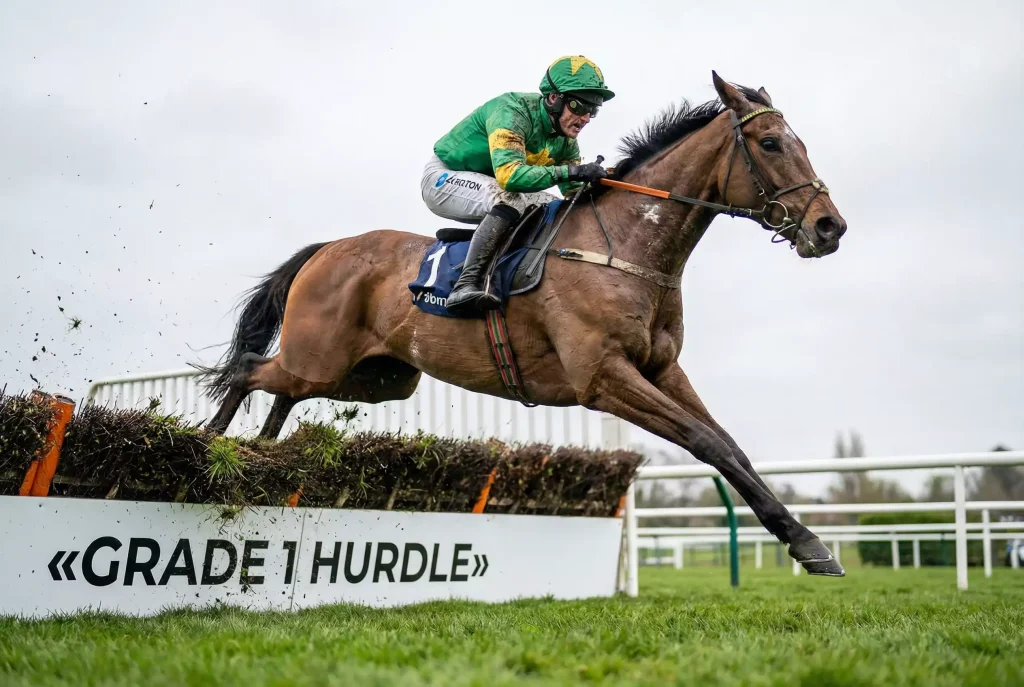
The Aintree Hurdle opens the Festival as Thursday’s headline act. This Grade 1 contest over two miles and four furlongs on the Mildmay Course attracts the best hurdlers in training, many arriving directly from Cheltenham Festival campaigns three weeks earlier. The race provides a different test to the Champion Hurdle: a longer trip that rewards stamina alongside speed.
Understanding the Aintree Hurdle’s character helps identify value in a market often shaped by Cheltenham form. Some horses improve for the extra distance. Others arrive tired from hard Festival runs. Separating freshness from fatigue, and genuine improvers from horses flattering their form, creates betting opportunities that pure form reading misses.
This guide profiles the race, analyses key contenders, and identifies betting angles for the 2026 renewal. Thursday’s card sets the tone for the Festival, and the Aintree Hurdle provides the first major betting opportunity.
Race Profile
The Aintree Hurdle is run over two miles and four furlongs on the Mildmay Course, Aintree’s conventional track rather than the Grand National course with its unique fences. The trip sits between the Champion Hurdle’s two miles and the longer staying hurdles, testing a blend of speed and stamina that suits versatile performers.
Grade 1 status means the best hurdlers in training compete for significant prize money. The race often attracts Champion Hurdle runners seeking a less demanding target after Cheltenham, alongside improvers stepping up in class. Field sizes typically range from eight to twelve runners, creating more open market competition than other Grade 1 races with smaller fields.
The Mildmay Course races left-handed with a stiff uphill finish. Horses that handle the climb finish strongly; those that don’t often fade when it matters. Ground conditions at Aintree in April tend toward good to soft, favouring horses that handle testing conditions without struggling in genuinely soft ground.
Historical patterns show that Cheltenham Festival form translates with caveats. Winners of championship races often face recovery challenges that compromise subsequent runs. Horses that ran well without winning sometimes arrive fresher and more willing to battle. The three-week gap between Festivals is shorter than it sounds for horses that competed under maximum pressure.
Form Guide
Willie Mullins dominated the 2026 Aintree Festival with eight winners across the three days according to Great British Racing, accumulating over £1.5 million in prize money. Any Mullins entries in the Aintree Hurdle demand serious consideration regardless of Cheltenham performance. The stable’s depth means Mullins can field fresh horses that weren’t over-raced at the Festival.
As Willie Mullins himself noted regarding one of his stable stars: “Paul (Townend) got down off him with a big smile on his face yesterday morning, so that means he’s back to where Paul wants him anyway.” This attention to horse welfare and preparation reflects why Mullins horses consistently arrive at major targets in peak condition. The smile matters because it indicates genuine wellbeing rather than forced readiness.
Champion Hurdle form requires careful interpretation. The winner faces the longest recovery period and the highest expectation. Second and third-placed finishers often offer better value at Aintree because they’ve competed hard but without the same emotional and physical toll that victory brings. The runner-up that just missed at Cheltenham might be the horse most motivated to atone.
Horses stepping up from handicap company deserve attention. A progressive hurdler winning handicaps off rising marks might be better than its rating suggests. If such a horse hasn’t competed at Cheltenham, it arrives at Aintree without the Festival fatigue that affects rivals. Fresh legs against tired opponents creates opportunity.
Track form matters. Previous Aintree winners or placed horses have demonstrated they handle the course. The climb to the finish and the left-handed configuration suit some hurdlers better than others. Checking whether contenders have Aintree experience provides insight that Cheltenham form alone doesn’t offer.
Betting Angles
Each-way betting suits the Aintree Hurdle’s typical field structure. With ten to twelve runners and three places paid at standard terms, place betting captures value that win-only misses. A horse that might not beat the class animals outright can still return profit by finishing third behind established stars.
At the 2026 Cheltenham Festival, favourites won 33% of races, seven from twenty-one. This outperforms general jumps racing averages but still means two-thirds of favourites lost. The Aintree Hurdle favourite faces similar probability, suggesting that backing against the market leader while including them in each-way calculations offers balanced exposure.
Trainer angles complement form analysis. Mullins, Gordon Elliott, and Nicky Henderson consistently target the Aintree Hurdle with leading candidates. Their entries signal genuine intent rather than speculative participation. Lesser-known trainers occasionally upset the major operations but do so rarely enough that focusing on established performers makes statistical sense.
Jockey bookings reveal trainer confidence. When a top stable books its first-choice jockey for a particular horse over alternatives, that decision reflects assessment of which horse offers the best winning chance. Watching where Paul Townend, Rachael Blackmore, or Nico de Boinville commit provides information about internal stable evaluations.
Ground conditions at declaration time should influence selections. If Aintree forecasts soft ground and your selection’s best form comes on good, the risk increases regardless of other positive factors. Conversely, horses that have proved themselves in testing conditions gain advantage when rain arrives during Festival week.
2026 Selections
Identifying specific selections before the entries are confirmed requires provisional thinking. The principles that guide selection remain constant even as the individual horses change. Look for horses that fit the profile the Aintree Hurdle rewards: proven stamina, Grade 1 quality, and freshness relative to rivals.
Horses from the Willie Mullins stable that skipped the Champion Hurdle but won or placed in other Festival hurdles deserve immediate shortlist inclusion. Mullins’ ability to target specific races with specifically prepared horses means his Aintree entries arrive with intent. A Mullins horse at 7/1 or bigger in the Aintree Hurdle represents genuine each-way value given the stable’s record at the meeting.
British-trained improvers stepping up from competitive handicaps offer alternative angles. A horse that won the County Hurdle or Coral Cup at Cheltenham has proved itself against large fields under big-race pressure. The step to Grade 1 company tests whether handicap form translates to elite level, but some horses make that jump successfully and reward punters who spotted the improvement before the market did.
Watch the market in the days before the race. Horses that shorten significantly without obvious public form suggest informed money seeing something the wider market hasn’t. Conversely, horses drifting despite solid Cheltenham performances might reflect concerns about recovery or ground suitability that racing insiders recognise but public form doesn’t capture.
The Aintree Hurdle offers specific value for each-way punters. With fields of ten to twelve runners and three places paid at standard terms, backing a horse to place provides reasonable probability at decent odds. A 12/1 shot finishing third returns profit that makes the bet worthwhile even without victory. Structure bets to capture place value rather than demanding win outcomes from a competitive Grade 1.
Consider multiple selections rather than concentrating on a single horse. Two each-way bets at modest stakes provide more coverage than one larger bet on the supposed best chance. The Aintree Hurdle has produced surprise results often enough that spreading risk across multiple contenders makes strategic sense. If one selection disappoints, the other might compensate.
The Aintree Hurdle opens Thursday’s Grade 1 action. Getting it right sets the tone for the Festival. Apply the principles, watch the market, and back with conviction when form, conditions, and price align. Thursday’s headline act deserves attention beyond the Grand National build-up that dominates casual conversation.