
Topham Chase Betting: The Grand National Fence Trial
 Available in US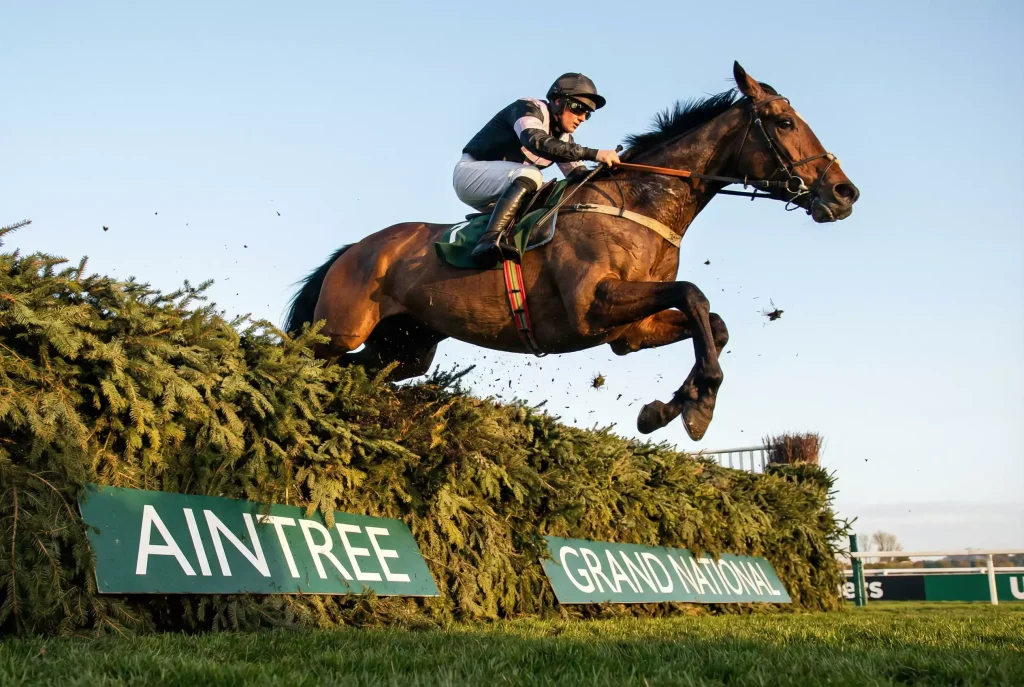
For punters, the Topham serves dual purposes. It’s a betting opportunity in its own right, with competitive handicap fields creating value for those who study form. It’s also a viewing opportunity that reveals how horses handle the unique fences, potentially informing Grand National selections for punters watching closely.
Understanding the Topham’s characteristics helps identify contenders whose profiles suit the race’s specific demands. Course form matters more here than in conventional races. The fences that separate Grand National completers from fallers perform similar filtering in the Topham.
What the fences demand is set out in the racecourse guide.
Race Profile
The Topham covers two miles and six furlongs over the Grand National course. This distance tests speed more than the four-mile Grand National, creating a different type of race despite using identical fences. Horses that handle the fences while maintaining pace often prove different from those that handle them while grinding through four miles.
Grade 2 status positions the Topham below Grade 1 championship level but above lower handicaps. The quality ensures competitive fields without the top-class specialists that dominate Grade 1 races. This positioning creates markets where outsiders genuinely can win, making each-way betting particularly appropriate.
Field sizes typically range from sixteen to twenty-four runners, depending on the year and the quality of entries. Larger fields create more variables and increase the importance of racing luck. Horses need clear runs at fences, space to jump without interference, and tactical positions that don’t compromise their chances.
The race takes place on Friday, ensuring horses and jockeys are fresh rather than feeling effects of earlier Festival exertions. Unlike races later in meetings, Topham contenders arrive without the accumulated fatigue that affects Saturday performances. Freshness represents an equalising factor rather than differentiating one.
Course Form Importance
The Grand National fences demand proven ability rather than assumed competence. Horses that have completed previous Tophams or Grand Nationals have demonstrated they handle the unique obstacles. First-time visitors carry risk that course winners don’t, regardless of how impressive their conventional form appears.
Safety improvements to the fences have changed their character without eliminating their challenge. The period from 2013 to 2018 saw six consecutive Grand Nationals without equine fatality, demonstrating that modified fences can maintain challenge while reducing risk. The Topham benefits from the same improvements, creating racing that tests horses without unnecessary danger.
Field reduction from 40 to 34 runners in the Grand National reflects ongoing welfare attention. This context affects how to interpret Topham form for Grand National purposes. Horses that handle Topham crowds may face slightly different dynamics in the reduced Grand National field. The principle of valuing course form remains, but application requires nuance.
Previous Topham placed horses deserve particular attention. A horse finishing fourth in last year’s Topham has proved it jumps the fences competently, stays the trip adequately, and handles the unique demands of Aintree’s course. That proof reduces uncertainty that form from other courses cannot eliminate.
Jockeys experienced over the Grand National fences add value to their mounts. Riders who have negotiated Becher’s Brook, the Canal Turn, and the Chair multiple times know angles and approaches that newcomers must discover in real time. Jockey experience partially compensates for horses lacking course form.
Cheltenham form provides secondary information. Horses that ran well at the Festival three weeks earlier demonstrate current wellbeing and competitive fitness. But Cheltenham form doesn’t guarantee Aintree success because the courses differ fundamentally. Use Festival form for fitness confirmation, not ability prediction.
The wider context is set out in our Aintree betting guide.
Key Contenders 2026
Specific contenders await confirmed entries, but principles guide selection regardless of individual horses. Target horses with proven Aintree form, appropriate handicap weights, and evidence of current fitness. The combination of these factors produces shortlists more reliably than any single factor alone.
Previous Topham winners returning off similar marks deserve immediate respect. A horse that won the race previously knows what’s required. The question becomes whether the handicapper has raised its mark beyond ability or whether it returns on terms that allow repetition. Compare current mark to winning mark for guidance.
Grand National also-rans sometimes drop into the Topham for a confidence-boosting run. Horses that completed the National but finished mid-division have answered the biggest questions about handling the fences. The shorter Topham trip might suit some of these better than the marathon demands of Saturday’s race.
Irish-trained entries warrant the same attention they receive in other Festival races. Mullins, Elliott, and other Irish trainers target the Topham alongside more prestigious races. Their entries often carry value because market attention concentrates on Grade 1 races while handicaps receive less scrutiny.
Young improvers stepping up in class offer each-way possibilities. A horse that won a lesser handicap convincingly might be improving fast enough to compete at Grade 2 level. These horses carry less weight than established handicappers, creating scenarios where class improvement compensates for experience deficit.
Horses that have run well in other cross-country or National Hunt races at Aintree deserve consideration. The course characteristics matter beyond just the fences. Horses that handle Aintree’s configuration, its undulations, and its demanding finish have demonstrated abilities that transfer to the Topham regardless of which race produced that evidence.
Watch declarations closely as the race approaches. Late withdrawals and surprise runners can shift market dynamics significantly. Being prepared to adjust selections based on the final field, rather than committing irrevocably to early choices, allows flexibility that captures value from field changes.
Betting Angles
Each-way betting suits the Topham’s competitive nature. With fields regularly exceeding sixteen runners, bookmakers typically pay four places. A 20/1 shot finishing third returns meaningful profit through the place portion while maintaining upside through the win element. Structure bets to reward multiple finishing positions.
Weight analysis mirrors Grand National approach. Horses at the top of the handicap carry burdens that history suggests prove difficult over these fences. Mid-weight runners have dominated recent renewals. Filter selections toward the lower half of the weights unless exceptional form justifies higher-weighted selections.
Market movements during Friday morning trading reveal professional interest. Casual Ladies Day money arrives later; early movements reflect informed opinion. Horses shortening without obvious explanation often reflect stable confidence or insider assessment. Track these movements before finalising selections.
The favourite’s position deserves consideration without reflexive backing or opposing. Topham favourites win regularly enough that opposing them requires specific reason. If the favourite lacks course form or carries top weight, opposition makes sense. If it has proved itself over these fences at appropriate weight, respect is warranted.
Trainer form across the meeting influences expectations. Stables performing well on Thursday typically continue that form on Friday. Conversely, yards whose horses underperformed might be struggling with fitness timing or ground conditions. Use Thursday results to adjust confidence in Friday selections.
Consider the Topham within your overall Festival betting. If you’ve backed several each-way in earlier races, the Topham provides another similar opportunity. If you’ve concentrated on win betting, the Topham’s competitive handicap might be where each-way approach adds value. Structure each race’s betting within broader strategy.
