Grand National 2027 Runners: Confirmed Entries and Early Fancies
 Available in US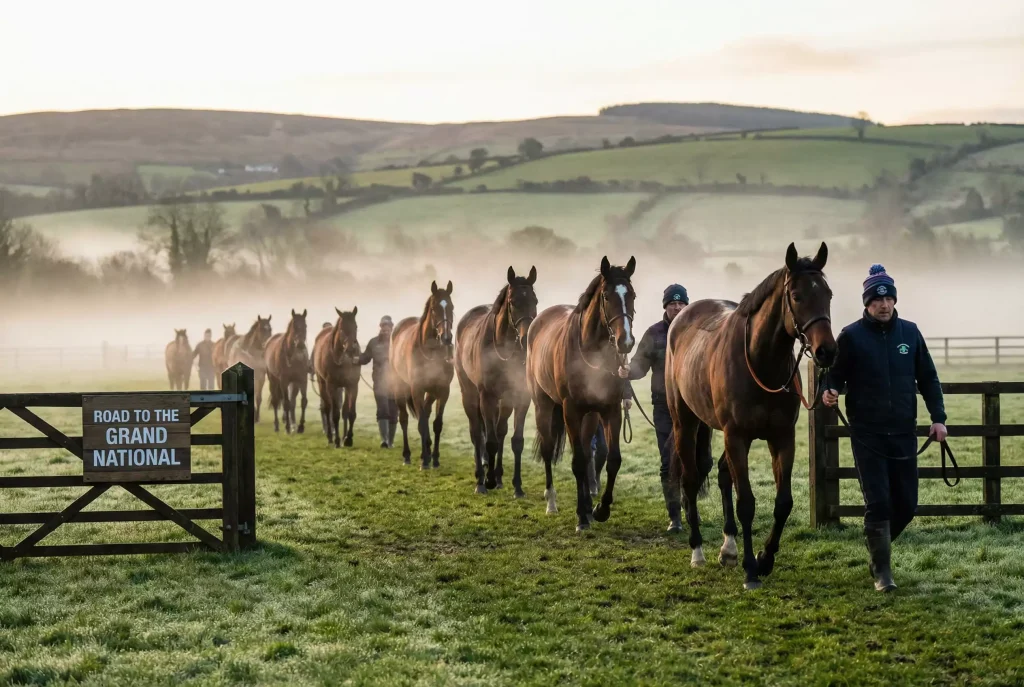
Grand National 2027 field of runners at Aintree
The 2027 Grand National field is taking shape. With initial entries now confirmed, the ante-post market has genuine runners to assess rather than speculative names. The field will thin between now and April, whittled down by weight announcements, trainer decisions, injury setbacks, and the relentless attrition of a National Hunt season. What remains on the morning of the race will be 40 horses deemed capable of completing four miles and two furlongs over thirty fences.
This year’s entry list tells a familiar story. Irish stables still dominate the numbers, trainers with proven Grand National form command the market, and the influence of top operations remains decisive. The 2027 runners represent a blend of established Grand National horses seeking repeat success and emerging chasers being aimed at Aintree for the first time.
Understanding who has entered, how the market views them, and which connections have multiple strings to their bow helps form early opinions. Some of these horses will never reach Aintree. Others will arrive as genuinely forgotten outsiders and run the race of their lives. The task is separating likelihood from hope across a field that starts large and grows more defined each month.
What each of them will carry is set by the weights.
Entry List Overview
The initial entry stage for the 2027 Grand National attracted 82 horses, a number that reflects both the race’s prestige and the tactical positioning of trainers across Britain and Ireland. Of those 82 entries, 52 came from Irish yards, representing over 63% of the potential field. This ratio has held steady in recent years, underlining the depth of Irish staying chasers.
British trainers account for the remaining 30 entries, with strong representation from the Cotswolds, the North, and Yorkshire. The concentration of British entries among a smaller number of stables reflects the realities of modern jumps racing: larger operations enter several horses to keep options open, knowing that most will fall by the wayside before April.
The entry stage is deliberately expansive. Trainers enter horses to keep their options flexible, not to commit. A horse entered in January might be aimed at the Scottish Grand National instead if its handicap mark proves unfavourable. Another might head for the Irish National at Fairyhouse. The Grand National entry is often one of several targets pencilled in, with the final decision deferred until closer to the race.
What matters is not the raw number of entries but which horses are seriously intended for Aintree. The weights announcement in February and subsequent declarations will clarify intentions. Until then, the 82 represents possibility rather than commitment.
Market Leaders
The ante-post market for the 2027 Grand National reflects recent trends. Horses from Willie Mullins’ Closutton stable again feature prominently, with several contenders carrying short prices. Lord of the Fences, a consistent performer over staying distances, is among the early market leaders thanks to solid form in major handicaps and a growing reputation for handling tough conditions.
River’s Edge, who ran prominently in the 2026 edition before falling at Becher’s Brook, returns with renewed interest from connections and punters alike. His experience over the Aintree fences is a major asset, and many view him as a horse who can improve with another run under his belt.
Beyond the obvious Mullins contenders, the market features horses who ran well in last year’s race without winning. Horses finishing in the first six often return and improve, particularly if they encountered traffic problems or were caught behind fallers. The each-way value often lies with proven course performers rather than untested entries.
British-trained market leaders face longer odds than their Irish counterparts, reflecting both quality differentials and market sentiment. While the gap remains, there is growing attention on British runners who have shown stamina and jumping ability in similar marathon handicaps. Whether that makes them undervalued or appropriately priced depends on your reading of the form.
At this stage, market leadership indicates trainer reputation as much as horse ability. The serious form analysis comes after the Cheltenham Festival when trial races clarify the pecking order.
Trainer Multiples
Willie Mullins enters the 2027 Grand National season with a large team, as is customary. His ability to cover multiple outcomes with several runners remains a key factor in market dynamics. Mullins typically enters between seven and eleven horses, knowing several will fall away but that the remaining runners offer multiple chances at the prize.
Gordon Elliott continues to field a strong Grand National team, balancing proven staying chasers with Aintree experience alongside horses being aimed at the race for the first time. His entries often include horses with soft-ground form, which can be crucial if the weather turns.
Dan Skelton’s operation remains one of the most consistent British forces in staying handicaps. Multiple entries from Lodge Hill always warrant attention, particularly horses who have shown aptitude for marathon trips and have experience over big fences.
Henry de Bromhead’s smaller team continues to produce horses that punch above their market position. His focus on quality over quantity often yields runners that surprise the market with strong performances in big handicaps. Other trainers with multiple entries spread the risk, knowing that having several runners increases the probability of at least one reaching the finish.
The wider context is set out in our Aintree betting guide.
Key Dates
The Grand National calendar follows a predictable rhythm. Weight announcements typically arrive in mid-February, giving trainers several weeks to assess whether their horse has been fairly treated by the handicapper. A harsh weight often prompts owners and trainers to look elsewhere.
The Cheltenham Festival in March serves as the final major trial for many Grand National contenders. Horses running in the Cross Country Chase, the National Hunt Chase, or staying handicaps over three miles use Cheltenham as a fitness booster and form marker. What happens at Cheltenham reshapes the ante-post market significantly.
Final declarations close on the Thursday before the Grand National, usually in mid-April. At this point, the 82 entries reduce to a maximum of 40 confirmed runners. The field must be finalised, jockeys booked, and race-day plans locked in. This is when speculative entries disappear and serious intentions become clear.
Monitoring each stage helps punters refine their shortlist. A horse that remains declared through all stages despite weight concerns signals connections who believe in its chance regardless of the burden.
Ones to Watch
The Grand National often rewards horses that arrive slightly under the radar. Market leaders carry pressure, weight, and expectation. A horse at 25/1 with a legitimate chance can outperform expectations without bearing the burden of being the one everyone expects to win.
Horses that ran prominently in the previous year’s Grand National without winning deserve attention. Experience over the unique Aintree fences counts for something quantifiable. A horse that negotiated Becher’s Brook twice, handled the drop at The Chair, and stayed the trip has proved it can do the hardest parts. Whether it can do them faster becomes the only remaining question.
Lightly weighted improvers entering off a rising handicap mark often outperform their price. The ideal Grand National profile is a horse that has been competing at a lower level, demonstrating stamina and jumping ability, and enters Aintree with weight on its side. Finding that horse before the market does is the art of Grand National betting.
Horses with proven soft-ground form also warrant monitoring. April weather at Aintree varies, but the course tends toward good to soft by the time the Grand National rolls around. A horse that handles testing conditions has an advantage if the heavens open during Festival week.
Watch the market through February and March. Horses that shorten without obvious public form suggest stable confidence. Horses that drift despite solid performances might be targets for each-way value at inflated prices.
